
When shopping for a lowboy trailer, one of the biggest decisions heavy haul buyers face is choosing between a mechanical detach lowboy and a hydraulic detach lowboy. Both trailer styles are designed to haul oversized and heavy equipment, but they operate differently and each has advantages depending on your application, budget, and hauling needs.
If you transport excavators, dozers, paving equipment, loaders, or other heavy machinery, understanding the differences between these two trailer types can help you choose the right setup for your operation.
What Is a Mechanical Detach Lowboy?
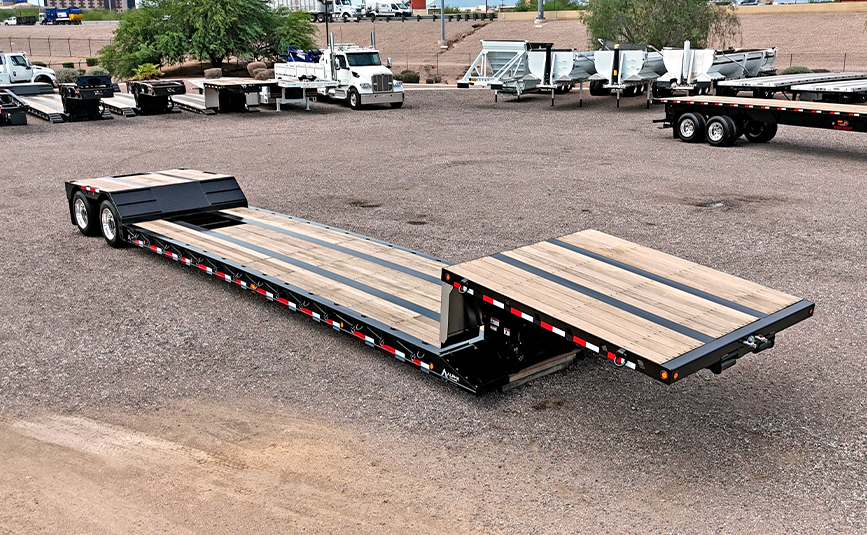
A mechanical detach lowboy uses a manual locking and release system to remove the trailer neck from the deck. After disconnecting the neck, equipment can be driven directly onto the trailer from the front.
Mechanical detach trailers are popular because they are simpler, lighter, and often less expensive than hydraulic detach models.
Common characteristics include:
- Manual neck release system
- Fewer hydraulic components
- Lower purchase cost
- Reduced maintenance complexity
- Lighter trailer weight for improved payload capacity
Mechanical detach trailers are commonly used in construction, paving, agriculture, and general heavy equipment transport.
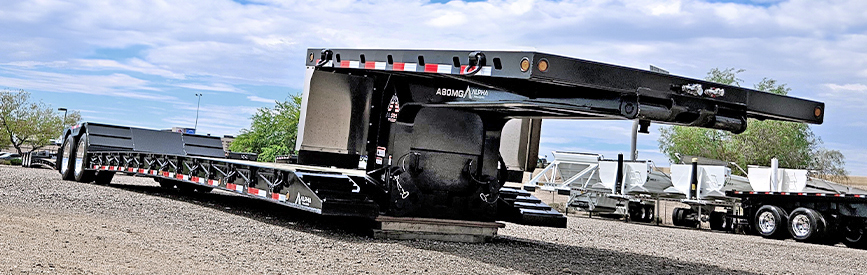
What Is a Hydraulic Detach Lowboy?
A hydraulic detach lowboy uses hydraulic cylinders to raise, lower, and detach the trailer neck. The hydraulic system makes connecting and disconnecting the trailer faster and easier, especially when loading heavy or oversized equipment frequently.
Hydraulic detach trailers are commonly preferred by operators hauling equipment every day or transporting extremely heavy machinery.
Typical features include:
- Hydraulic-powered neck operation
- Faster loading and unloading
- Easier trailer setup
- Improved convenience for frequent use
- Better handling of very heavy equipment
Hydraulic lowboys are especially common in large-scale heavy haul and specialized transportation operations.
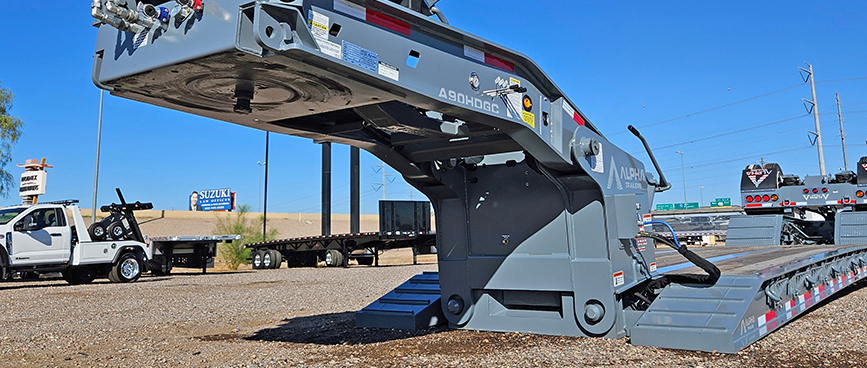
Loading Differences Between Mechanical and Hydraulic Detach Lowboys
One of the biggest practical differences between the two trailer types is the loading process.
Mechanical Detach Loading
With a mechanical detach lowboy:
- The trailer is positioned on level ground
- The neck locking system is manually released
- The tractor pulls away from the trailer deck
- Equipment is driven onto the deck from the front
This process is reliable and straightforward, but typically takes longer than a hydraulic detach setup.
Hydraulic Detach Loading
With a hydraulic detach trailer:
- Hydraulic cylinders lift or lower the neck
- The detach process is partially automated
- The tractor disconnects quickly
- Equipment is loaded from the front
Hydraulic systems reduce manual labor and make frequent loading cycles much faster.
Mechanical Detach Lowboy Advantages
Lower Purchase Cost
Mechanical detach trailers usually cost less than hydraulic detach models. For many contractors and owner-operators, this lower upfront investment is a major advantage.
Simpler Maintenance
Because there are fewer hydraulic components, mechanical detach trailers tend to be easier and less expensive to maintain over time.
There are:
- fewer hydraulic hoses
- fewer cylinders
- fewer seals and fittings
- less risk of hydraulic leaks
This simplicity can reduce downtime and repair costs.
Lighter Trailer Weight
Mechanical detach trailers are often lighter than hydraulic detach versions. A lighter trailer may allow you to carry additional payload while staying within legal weight limits.
For operators hauling equipment near maximum legal weights, every pound matters.
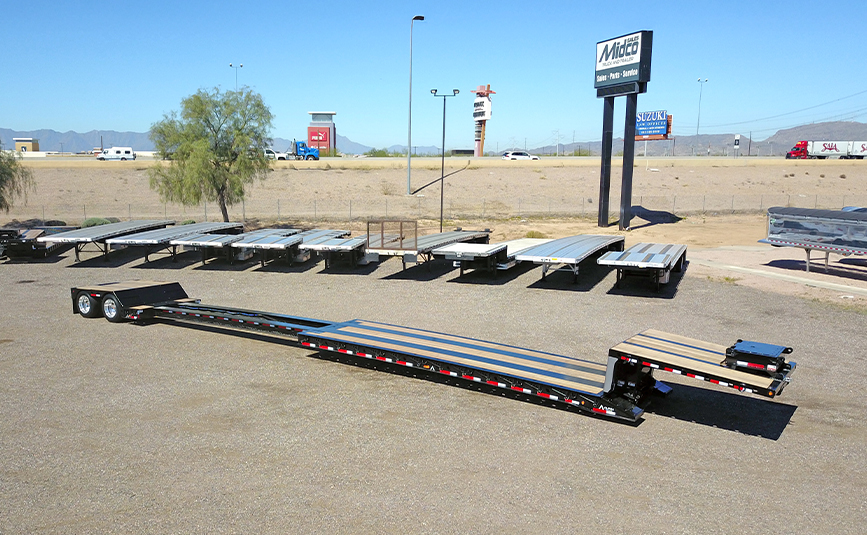
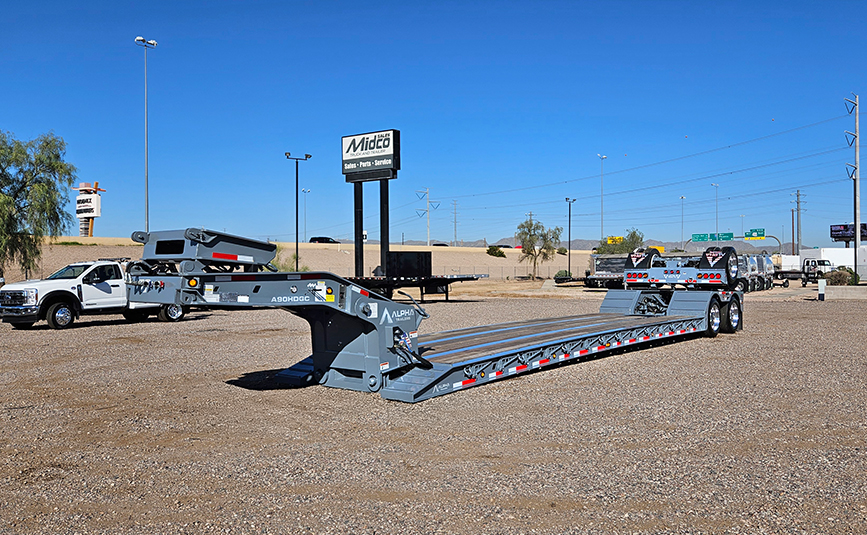
Mechanical Detach Neck Trailers Available From Midco Sales
Hydraulic Detach Lowboy Advantages
Faster Loading and Unloading
Hydraulic detach trailers significantly speed up the loading process. This is especially beneficial for fleets making multiple stops or loading equipment several times per day.
Time savings can improve productivity and reduce labor costs.
Easier Operation
Hydraulic systems reduce the physical effort required to detach and reconnect the trailer neck.
Operators often prefer hydraulic detach systems because:
- setup is faster
- alignment is easier
- less manual work is involved
Better for Frequent Heavy Haul Use
Companies transporting extremely heavy or oversized equipment daily often choose hydraulic detach trailers because of the convenience and efficiency.
Hydraulic detach systems are particularly beneficial for:
- heavy construction fleets
- crane transport
- large excavation contractors
- specialized heavy haul operations
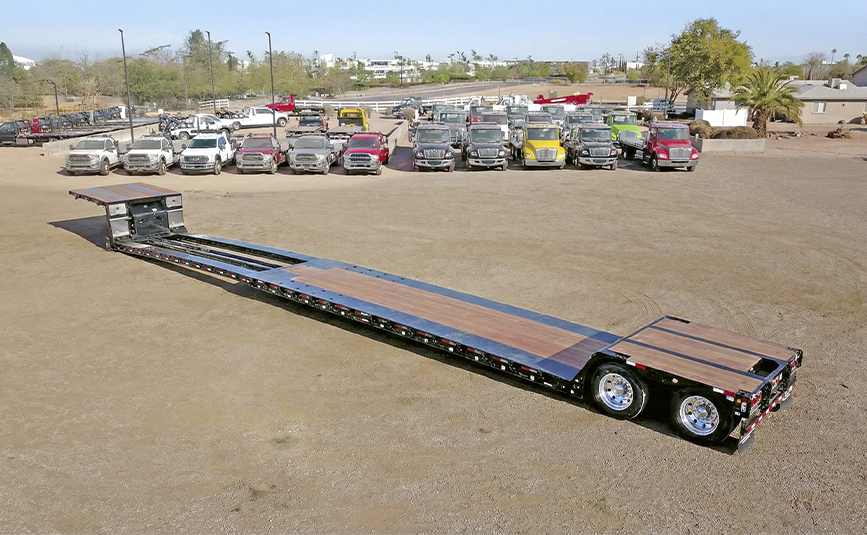
Hydraulic Detach Neck Trailers Available From Midco Sales
Which Lowboy Trailer Is Better?
The best option depends on how you use the trailer.
A Mechanical Detach Lowboy May Be Best If You:
- want a lower purchase price
- prefer simpler maintenance
- haul equipment occasionally
- prioritize lighter trailer weight
- want long-term durability with fewer hydraulic systems
A Hydraulic Detach Lowboy May Be Best If You:
- load and unload equipment frequently
- want faster operation
- transport extremely heavy machinery
- prioritize convenience and efficiency
- operate a dedicated heavy haul fleet
Popular Equipment Hauled on Detach Lowboys
Both mechanical and hydraulic detach lowboys are commonly used to transport:
- excavators
- bulldozers
- paving equipment
- wheel loaders
- cranes
- forestry equipment
- mining equipment
- agricultural machinery
The right trailer configuration depends on the size, weight, and frequency of your hauling operation.
Choosing the Right Lowboy for Your Operation
There is no universal “best” lowboy trailer. The ideal setup depends on:
- your hauling frequency
- equipment weights
- maintenance preferences
- budget
- loading conditions
For many owner-operators and contractors, a mechanical detach lowboy offers excellent value and simplicity. For high-volume heavy haul fleets, a hydraulic detach trailer may provide better long-term efficiency.
At Midco Sales, we offer a wide range of lowboy trailers for heavy equipment transport, including mechanical detach and hydraulic detach models from leading manufacturers. Contact our sales office at (480) 999-0607.


